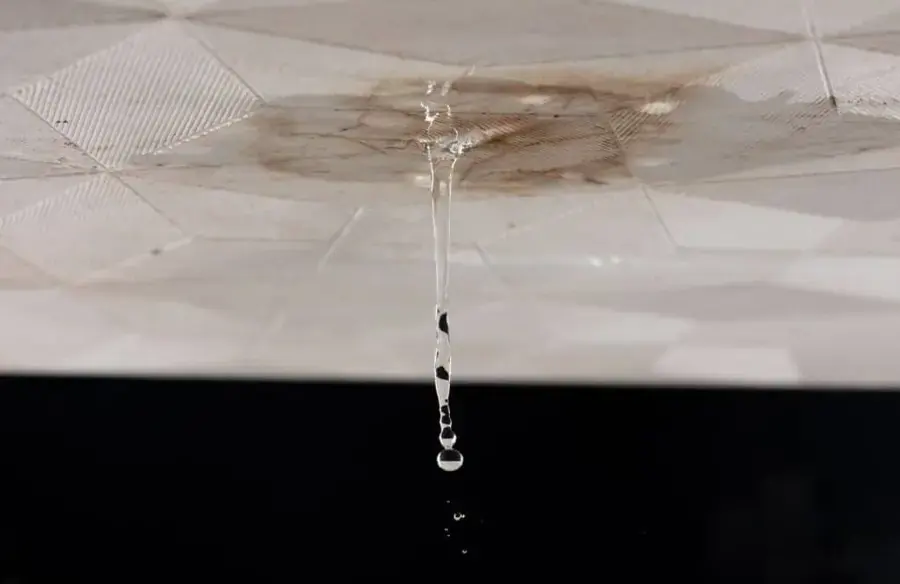
In Freehold Borough, many households live above or below a neighbor, so a leak from the unit above is a realistic cause of ceiling damage. A stain that grows or a sagging patch of drywall deserves quick attention, because water above a ceiling can reach wiring, insulation and the wall below.
Key takeaways
- The 2020 to 2024 housing data counts 1,939 renter occupied units and 606 units in buildings of 50 or more in Freehold Borough.
- A stain, a sag or a drip means water is above the ceiling, and a sagging ceiling can fall.
- Stay out from under a bulging ceiling, keep the area clear and switch off power to the affected room if the panel is dry.
- Tell the landlord or building manager and the neighbor above right away, then photograph the damage.
- Wet drywall and insulation above the ceiling are opened and dried, and the source of the leak is repaired before the ceiling is closed.
Why a leak from above is a realistic problem in Freehold Borough
The borough has 4,379 housing units, and 4,201 are occupied. Of those occupied units, 2,262 are owner occupied and 1,939 are renter occupied, so many households live above or below a neighbor.
Housing counts show the mix: 606 units sit in buildings with 50 or more units, 421 are in two unit buildings, 252 are in buildings of 3 to 4 units, and 403 are single family attached homes.
- Large buildings with many units stacked on each other.
- Two unit buildings where one household lives above another.
- Attached homes that share walls and sometimes floors.
- Mixed ownership, with owners and renters in the same building.
Where the water above the ceiling comes from
A ceiling stain is a symptom. The cause sits above or inside the ceiling, and finding it matters as much as drying the damage.
Common causes in a multi unit building are leaks from bathrooms, kitchens and laundry areas in the unit above.
Bathrooms
A tub or shower that leaks at the drain, a toilet seal that fails or a supply fitting that weeps can send water down through the floor structure.
These leaks are often slow and show as a faint ring that grows.
Kitchens and laundry
A dishwasher hose, a washer supply hose or a refrigerator water pipe that fails sends water across a floor and through gaps into the ceiling below.
Appliance leak water damage in Freehold often starts this way in attached homes and apartments.
Roof or pipe leaks in shared structure
A roof leak or a leaking pipe in a shared wall can look like a unit above problem.
Telling the landlord or manager helps trace where the water actually starts.
Because Freehold Borough has buildings of many sizes, the same stain can have very different sources from one address to the next.
The first steps when a stain appears or a ceiling sags
A ceiling that bulges holds water, and the drywall can give way. The first rule is to keep people and belongings away from the sagging spot.
Once the area is clear, the next steps are small but quick.
A sagging patch can be tested only by a professional, so poking it with a broom or a finger is not advised. If it is dripping steadily, a small hole made by the restoration team can let the water drain into a bucket in a controlled way.
- Move furniture, electronics and rugs out from under the stain.
- Place a bucket under any drip and keep family and pets out of the room.
- Switch off power to the room at the panel if it is dry and safe to reach.
- Avoid using light fixtures or ceiling fans near the stain.
- Photograph the stain from several angles, with dates.
- Tell the landlord or building manager and the neighbor above.
Who to tell and what to ask
In a rental, the landlord or building manager is the first contact. In an owned unit, the building association or manager is usually the next call, and the neighbor above should be told as well.
The source of the water decides who handles the repair, so asking for the source to be traced is a reasonable request.
- Give the date the stain first appeared and any changes after that.
- Share photos and notes in writing, such as by email or message.
- Ask who will inspect the unit above.
- Ask how the building handles emergency repairs.
- Keep every response in one place for the insurer.
- Ask for repair dates in writing, because a stain that returns after painting usually means the source was not fixed.
Opening, drying and repairing the ceiling
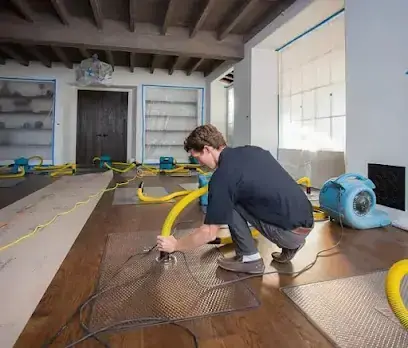
The restoration team checks the ceiling with moisture meters and cuts the wet drywall open to see what is above it. Wet insulation comes out, and framing is dried in place with air movers and dehumidifiers.
Ceiling leak water damage cleanup in Freehold covers the opening, the drying and the closing, and the repair of the source happens before the ceiling is closed.
Why a small opening matters
A visible stain can be small while the wet area above it is much larger.
A cut near the stain lets the team see how far the water traveled.
Drying above and below
The ceiling and the wall below both need readings, because water follows the framing downward.
Floors in the unit below and any carpet or pad that took drips are checked too.
- Ceiling drywall and insulation.
- Wall cavities below the leak.
- Carpet, pad and floor edges.
- Light fixtures and wiring boxes.
Insurance and records in a multi unit building
A renter may have a renters policy, an owner may have a condo or home policy, and the building may carry its own coverage. Which one pays depends on the source and the policy language.
Owners and tenants can read about the local team on the Freehold water damage page and the broader ceiling leak service in Monroe Township. Photos, dates, messages to the landlord and moisture logs all help.
- Take photos before and after each stage.
- Keep the names of those contacted and when.
- Save invoices for emergency work and repairs.
- Ask the insurer which policy applies and what proof it needs.
Questions
Who should be told about a leak from the unit above?
The landlord or building manager first, then the neighbor above, and the insurer. Giving dates and photos in writing keeps a clear record.
Is a sagging ceiling dangerous?
It can be. A bulge holds water, and the drywall can fall, so people should stay out from under it and a restoration team can open it safely.
Do ceilings always have to be cut open?
Often yes, at least in the wet area. Wet drywall and insulation do not dry in place, and an opening lets the team check what is above.
Can a washer or dishwasher cause a ceiling leak below?
A washer hose that fails, a dishwasher hose or a refrigerator water pipe can send water through the floor and into the ceiling below.
Does the leak have to be fixed before drying starts?
The source should be stopped first, and drying can start at the same time as the repair planning. The ceiling is closed only after the source is repaired.