Water Heater Leak Cleanup in Monroe Township, NJ
A tank that rusts through can empty forty to eighty gallons and keep refilling until the cold supply is closed. The extraction crew pulls the water and the drying team dries the floor, walls and cabinets nearby.
(888) 471-9821Call about the leaking water heater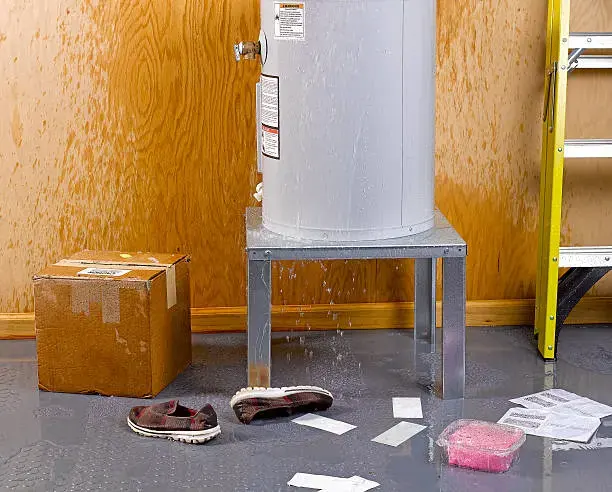
First steps for water heater leak cleanup in Monroe Township
- 1
Close the cold supply
The valve on the pipe into the top of the tank.
- 2
Shut off power or gas
Breaker for electric, gas valve to off for gas.
- 3
Keep clear of hot water
Water near the tank can scald.
- 4
Photograph the tank and floor
Including the label and the leak point.
How water heater leak cleanup is handled in Monroe Township
- L1
Stop the flow
Cold supply and power or gas off.
- L2
Extract
Water pulled from floors and carpet.
- L3
Remove
Wet pad and drywall bottoms out.
- L4
Dry and verify
Readings until the room is dry.
What does water heater leak cleanup cost in Monroe Township, NJ?
In Monroe Township, NJ, water heater leak cleanup typically runs $900 to $4,500, set by where the tank sits, how far the water spread and whether carpet, drywall or cabinets come out. Replacing the heater is separate.
- Extraction
- Air movers
- Readings
- Carpet or laminate out
- Drywall bottoms
- Dehumidifier
- Several rooms
- Cavity drying
- Contents moved
Ranges are typical, not a quote: the water category, square footage, material class and how fast drying started move the number most. The Monroe Township water damage cost calculator gives a closer planning range.
Most tank water heaters last about eight to twelve years. Hard water speeds up sediment buildup and corrosion, and the bottom of the tank eventually lets go. In Monroe Township the tank usually sits in the basement, the garage or a utility closet off the hallway in single-story homes.
Where the water goes
- Basement tanks flood the slab and soak finished walls and stored boxes.
- Closet tanks in slab homes soak hallway carpet, laminate and the bottom of nearby walls.
- Garage tanks run under the door into the laundry or kitchen.
A slow drip from the relief valve or a fitting is a warning; a puddle under the tank usually means the tank is failing. The Department of Energy Energy Saver pages cover water heater upkeep and replacement.
How a water heater leak is cleaned up
Once the cold supply and power or gas are off, the extraction crew pulls the water from floors and carpet. The tech who does the walkthrough checks walls, cabinets and flooring around the tank with meters. Wet pad and drywall bottoms come out, and air movers and a dehumidifier dry the room. A flooded basement follows the basement flooding cleanup process.
After the tank is replaced
A plumber replaces the heater. A drain pan with a pipe to a drain, or a leak sensor with an automatic shutoff, limits the next failure. The EPA WaterSense program has tips on catching leaks early.
Water heater leak cleanup across Monroe Township and nearby towns
Monroe Township Water Damage Restoration covers ZIP 08831 from Rossmoor, Clearbrook and Concordia to Whittingham, Applegarth, Prospect Plains and the homes along Route 33 and Spotswood-Englishtown Road.
Nearby coverage reaches Jamesburg, Spotswood, Helmetta, Cranbury, South Brunswick, Hightstown.
Water Heater Leak Cleanup questions in Monroe Township, NJ
How do I stop a leaking water heater?
Close the cold water valve on top of the tank and turn off the power or gas. If that valve will not close, close the main.
How long do water heaters last?
Tank heaters usually last about eight to twelve years. Hard water and skipped flushing shorten that.
Is water heater damage covered by insurance?
Water damage from a sudden tank failure usually is; the heater itself usually is not. Coverage depends on your policy, so check with your own insurer.
Can the carpet near the tank be saved?
Clean water caught early often allows the carpet to be dried, while the pad is usually replaced.
How long does drying take?
Usually two to four days for one room, longer in a finished basement.
Should I add a drain pan?
A pan with a drain pipe, or a leak sensor with an automatic shutoff, limits damage from the next failure.
Tank let go? Have the water pulled and the room dried.
The crew extracts the water and dries the floors and walls around the tank to the IICRC S500 goal.