Emergency Water Extraction in Monroe Township, NJ
Standing water keeps soaking into pad, drywall and framing every hour it sits. The extraction crew pulls it out with truck-mounted pumps, 24/7, so drying can start on a wet floor instead of a flooded one.
(888) 471-9821Get the pumps rolling to the house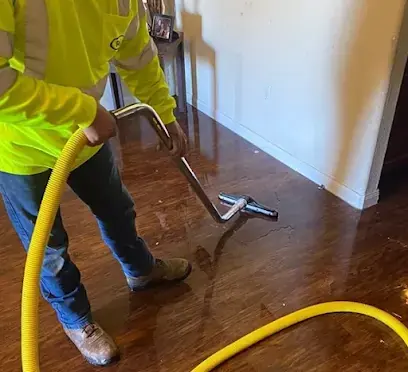
First steps for emergency water extraction in Monroe Township
- 1
Stop the source
Close the main or the fixture valve if it is safe to reach.
- 2
Cut the power
Switch off breakers to wet rooms when the panel is dry.
- 3
Stay out of deep water
Do not wade into basement water near outlets or the furnace.
- 4
Photograph everything
Take wide and close photos before anything is moved.
How emergency water extraction is handled in Monroe Township
- L1
Assess
Category, depth and electrical safety are checked first.
- L2
Pump out
Submersible pumps handle deep basement water.
- L3
Extract
Truck-mounted wands pull water from carpet, tile and slab.
- L4
Map and hand off
Meters set the drying plan for each room.
What does emergency water extraction cost in Monroe Township, NJ?
In Monroe Township, NJ, emergency water extraction typically runs $400 to $2,500, set by how much water is standing, the square footage and whether carpet and pad are involved. Drying is usually priced separately.
- Truck-mounted extraction
- Carpet and pad extraction
- Moisture map
- Submersible pump-out
- Weighted carpet extraction
- Baseboard check
- Category 3 water
- Removal of wet pad
- Antimicrobial treatment
Ranges are typical, not a quote: the water category, square footage, material class and how fast drying started move the number most. The Monroe Township water damage cost calculator gives a closer planning range.
Extraction is the first and cheapest part of any dry-out. The extraction crew sets truck-mounted pumps outside, runs hoses to the wet rooms and pulls water from carpet, pad, tile and basement slabs before it moves deeper into the house.
Why extraction comes before anything else
Water that stays on the floor wicks up drywall, swells baseboards and soaks into the bottom plate of every wall it touches. In a Monroe Township basement it also flows to the lowest corner and pools against the block walls.
- Truck-mounted units pull far more water per hour than a shop vacuum.
- Weighted extraction tools squeeze water out of carpet and pad.
- Submersible pumps handle deep basement water before the wands go in.
The EPA notes that wet materials dried within 24 to 48 hours usually avoid mold growth, which is why the clock matters. Its mold and moisture guidance explains the window.
What happens right after the water is out
The tech who does the walkthrough maps moisture with pinless meters and thermal imaging to see where the water traveled. That map sets the structural drying plan: how many air movers, which dehumidifiers and which materials can stay.
Carpet pad that held clean water for a short time is often lifted and replaced, while the carpet itself can sometimes be dried. Anything touched by sewage or outside flood water comes out.
Extraction in basements, slab homes and businesses
Basement homes in Applegarth and Prospect Plains usually need a pump-out first. Single-story homes in the adult communities lose water across slab floors under carpet and laminate. Offices and warehouses near Exit 8A get extraction in phases so work areas reopen sooner. When outside water is involved, Ready.gov flood safety advice on electrical hazards applies before anyone wades in.
Emergency water extraction across Monroe Township and nearby towns
Monroe Township Water Damage Restoration covers ZIP 08831 from Rossmoor, Clearbrook and Concordia to Whittingham, Applegarth, Prospect Plains and the homes along Route 33 and Spotswood-Englishtown Road.
Nearby coverage reaches Jamesburg, Spotswood, Helmetta, Cranbury, South Brunswick, Hightstown.
Emergency Water Extraction questions in Monroe Township, NJ
How long does water extraction take?
Most rooms take an hour or two. A flooded basement with several inches of water can take most of a day before the drying equipment goes in.
Can a shop vacuum do the same job?
A shop vacuum helps with a small spill, but it cannot match the suction of truck-mounted extraction, and it leaves far more water in carpet and pad.
Does the carpet have to be thrown out?
Not always. Carpet that held clean water briefly can often be extracted and dried in place, while the pad under it is usually replaced. Sewage-soaked carpet comes out.
Is extraction the same as drying?
No. Extraction removes liquid water. Drying removes the moisture left in drywall, framing and concrete, which takes air movers and dehumidifiers several days.
Is water extraction covered by insurance?
When the water came from a sudden discharge such as a split pipe, extraction is usually part of the covered mitigation. Coverage depends on your policy, so check with your own insurer.
What if the power is out?
The extraction crew brings truck-mounted units and generators, so pumping can start even when the house has no power.
Water standing in the house? Get it pumped out now.
Truck-mounted extraction pulls the water, then the drying team takes the structure to the IICRC S500 goal.