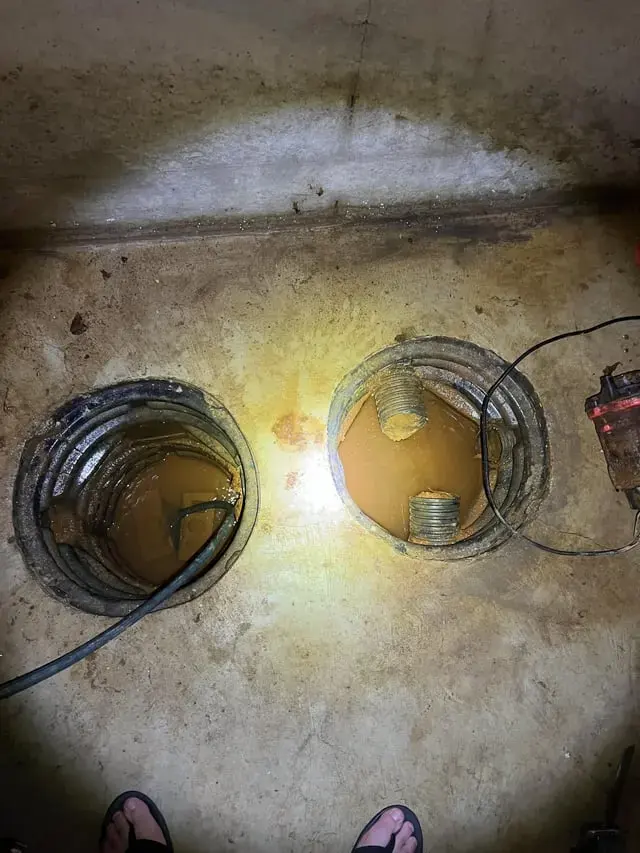
Many Monroe Township homes built in the 1990s and 2000s have full basements with a sump pit, and the pump in that pit does its job only while it has power. A storm that knocks out electricity can leave a basement without protection just as the rain is heaviest.
Key takeaways
- A sump pump needs electricity, so a power outage during a storm can stop it when it is needed most.
- Monroe Township has seen storm outages before, including Sandy in 2012, and heavy rain from Ida in 2021.
- If water is rising, keep out of the basement until the power to it is off and the floor is safe to enter.
- Extraction comes first, then removal of wet materials, then drying until moisture readings return to normal.
- Humid summers slow basement drying, so drying equipment and readings matter more in warm weather.
Why a sump pump fails when it is needed most
Monroe Township mixes age restricted communities with 1990s and 2000s family subdivisions that have full basements and sump pits. In those homes, the sump pump moves groundwater from the pit to the outside, keeping the basement dry during rain.
The pump is only as reliable as its power. Storms that bring heavy rain often bring outages, and when the grid fails, the pump stops while water keeps arriving.
Power loss
Sandy in 2012 brought outages to Monroe Township, and any storm with strong wind can bring down power lines.
Without a battery or generator backup, a pump cannot run, even if it is in perfect shape.
Mechanical failure
A stuck float, a clogged intake or an old motor can stop a pump even when the power is on.
A pump that runs constantly but does not lower the water level may have a failed check valve or a blocked discharge.
How storms in this area load a sump pit
Manalapan Brook and Matchaponix Brook, which join as the South River in the Raritan basin, are the main water features around Monroe Township. Nor'easters and tropical storm remnants, such as the heavy rain from Ida in 2021, put large amounts of water into the ground quickly.
When the ground is soaked, the pit fills faster and the pump runs harder. A pump that handles a normal rain can fall behind in a long storm.
Tropical storm remnants and nor'easters are the usual pressure points, and Monroe Township has both. A homeowner who expects the pump to handle every storm may not notice a problem until the water is already on the floor.
- Back to back storms leave the ground saturated, so the pit fills sooner.
- Long outages mean the pit can overflow before power returns.
- Debris in the pit can jam the float.
- An undersized pump may keep pace in light rain and fail in heavy rain.
What to do while water is rising
The first rule is safety. A flooded basement can hide energized wiring, so no one should walk into standing water that is near outlets, a panel or an extension cord.
If the basement is dry but the pit is full, small steps can still limit damage.
- Switch off power to the basement at the main panel only if the panel is in a dry spot.
- Move stored items, electronics and furniture off the floor.
- Check the pit for a stuck float if it is safe to look.
- Clear the discharge area outside so water is not pushed back toward the house.
- Keep children and pets upstairs.
- Call the restoration team early if the water keeps rising, because pumping a deep basement takes equipment.
- Photograph the water level every so often for the insurer.
How extraction and basement cleanup work
Once the water has stopped rising, the extraction crew pumps out the basement with portable pumps, and wet vacuums finish the remaining water on the floor. Pumping is done in stages when the water is deep so the walls and slab are not stressed.
Sump pump failure cleanup in Monroe Township covers the pump out, the removal of wet materials and the drying that follows, and basement flooding cleanup addresses finished basements with carpet, drywall and furniture.
Finished basements
Carpet, pad and wet insulation are removed, and drywall is cut above the waterline.
Contents are sorted into dry, cleanable and discard piles.
- Carpet and pad that soaked up groundwater.
- Drywall wet more than a few inches up the wall.
- Cardboard, paper and particleboard furniture.
Unfinished basements
Concrete, block walls and framing are cleaned and dried, and stored items are inspected and moved.
Pump out and drying are the main steps, because little needs to be removed.
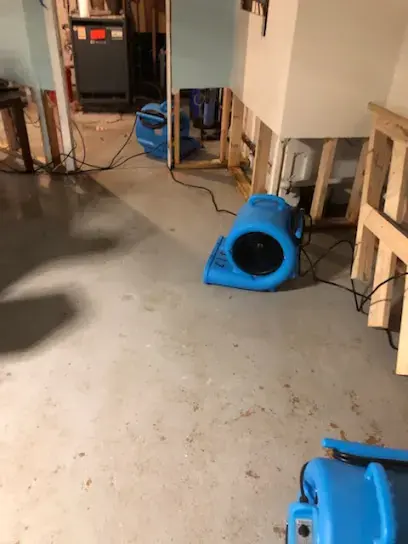
Drying a basement during humid weather
Monroe Township summers are humid, and humid air slows basement drying. Dehumidifiers matter more in warm weather, and doors to unaffected rooms stay closed so the equipment is not fighting outside air.
Moisture readings are taken daily on walls and the slab, and equipment stays in place until readings return to normal. Basements dry more slowly than upper floors because the slab and the walls hold moisture longer.
- Air movers push air across walls and the slab.
- Dehumidifiers pull water from the air.
- Readings decide when drying is done, not the calendar.
- Mold can begin on wet materials within 24 to 48 hours, so equipment should start promptly.
- Odors that linger after drying are a sign that something wet remains hidden, so the team checks wall bases and the slab edges again.
Getting the sump system ready for the next storm
After a failure, owners can look at what would keep the pit working next time. A battery backup pump, a tested float and a clear discharge outside all help.
Nearby towns see the same storm patterns, so neighbors in Jamesburg and Spotswood deal with similar rain and outage trouble. A pump check before the season starts is cheap compared with a flooded basement.
- Test the pump by pouring water into the pit.
- Replace a pump that is old or runs constantly.
- Add a battery or water powered backup for outages.
- Keep the discharge pipe clear and pointed away from the house.
- Know where the panel is and who to contact after a storm.
Questions
Why does a sump pump stop working in a power outage?
It runs on electricity, so without power from the grid, a battery or a generator it cannot move water out of the pit, even if the pump itself is in good shape.
Is it safe to enter a flooded basement?
Not until the power to the basement is off and the water is not near outlets or the panel. Hidden wiring can be energized, so wait for help if the panel is wet.
What gets removed after a basement floods?
Wet carpet, pad, insulation and drywall that soaked up water are usually removed, while concrete, block and framing are cleaned and dried in place.
Why does basement drying take longer in summer?
Humid air holds more moisture, so dehumidifiers work harder and walls and the slab give up water more slowly.
Can the pump be fixed before the cleanup finishes?
A plumber can repair or replace the pump while the cleanup goes on, and a working pump keeps new water from entering during the drying.