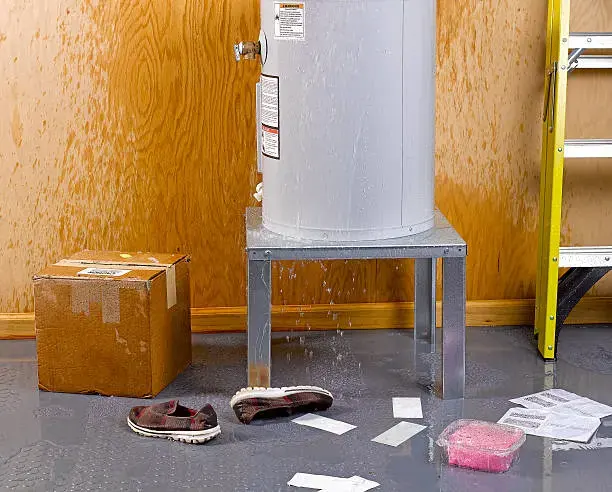
A water heater tank that fails late in the evening leaves two problems at once: water spreading across the floor and no hot water in the house. In South River, the borough's Building Department FAQ answers the permit question for after hours failures, and the cleanup of the floor can start without waiting on it.
Key takeaways
- The Building Department FAQ says a homeowner whose water heater fails after hours does not have to wait for a permit before replacement.
- The borough asks for a notice by message or email, and the contractor files the permit during working hours.
- Ordinance 288-4 limits construction and demolition at night but excludes emergency work.
- Stopping the supply, moving belongings and extracting water should begin right away, whatever the replacement timeline.
- Wet drywall, baseboards and flooring around a tank are dried quickly because water spreads out from the heater into hidden spaces.
What the borough says about after hours replacement
The South River Building Department FAQ takes up the situation directly: a homeowner whose water heater fails after hours does not have to wait for a permit before replacement.
The borough asks for a notice by message or email that an emergency exists, and the contractor files the permit during working hours. The notice is the paper trail that shows the replacement was an emergency and not a skipped permit.
- Send the notice as soon as the heater is shut down.
- Include the address and a short note that the tank failed.
- Keep a copy of the message or email.
- Ask the contractor to file the permit when the Building Department is open.
Quiet hours and emergency work
South River's Ordinance 288-4 bars construction and demolition from 6:00 PM to 7:00 AM on weekdays and from 6:00 PM to 9:00 AM on weekends and federal holidays. The ordinance excludes emergency work.
A failed tank that is flooding a utility room is an emergency, so water extraction, shutoffs and a replacement tank do not conflict with the quiet hours. Larger rebuild work, like replacing finished drywall, should wait for normal hours.
What counts as emergency work
Stopping the water, pumping out standing water and removing a failed tank are urgent steps.
Painting, trim work and finish carpentry are not.
Neighbors and noise
Drying equipment runs steadily and does not involve demolition, so it is a different kind of work from the construction the ordinance limits.
Letting a neighbor know in a shared building helps, because water often travels.
The first steps at the tank
The goal at the tank is to stop new water and make the area safe. The order matters.
A tank that has failed will keep draining until the cold supply is closed, and a gas or electric heater needs its energy supply shut off before anyone works near the wet area.
- Close the cold water valve on the supply pipe above the tank.
- Switch off the breaker for an electric heater or the gas control for a gas heater.
- Stay out of standing water if the floor outlets or panel are wet.
- Open a drain valve on the tank only if the water is cool and the area is safe.
- Photograph the tank, the label and the wet floor before moving anything.
- Send the borough notice by message or email once the water is stopped.
What the water does after the tank fails
A tank holds a lot of water, and a sudden failure sends much of it across the nearest floor. In a closet, it runs into wall framing and drywall.
In a garage or basement room, it spreads across the floor and under walls.
Water that reaches drywall climbs by wicking, so a floor that looks only damp can hide wet baseboards and wall bottoms.
The longer water sits against the base of a wall, the more of it climbs, so the pump out is the step that sets how big the repair will be.
Appliances, cabinets and stored boxes near the tank are checked too, because they sit in the path of the water.
Closet and utility room leaks
A tank in a closet sends water into the framing and the floor under the closet, and out under a door into the next room.
Drywall at the bottom of the wall is the first to wick.
Basement and garage leaks
Open floors spread water thin and wide, which can reach stored boxes and furniture.
Concrete dries slowly, so moisture readings after pump out show whether it is truly dry.
How extraction and drying handle the floor
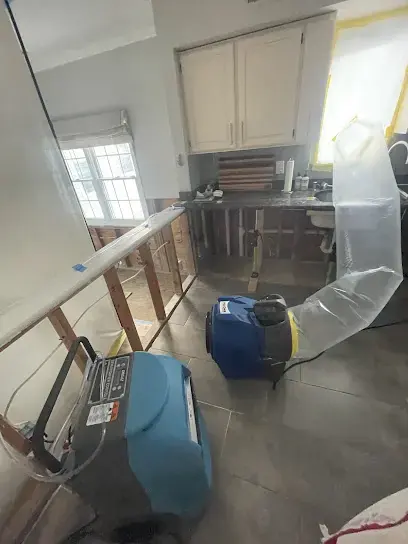
The extraction crew removes standing water with pumps and wet vacuums, then checks moisture in walls, baseboards and subfloors with meters. Drying equipment is placed to match what the readings show.
Water heater leak cleanup in South River and water extraction in South River are usually started together, because pumping and drying belong to one plan.
- Standing water is pumped out before anything else.
- Wet baseboards and the bottom of drywall are checked and opened if needed.
- Air movers and dehumidifiers run until moisture readings are normal.
- Mold is a reason to move fast, because wet materials can grow it within 24 to 48 hours.
Permits, replacement and who does what
South River's FAQ also notes that a homeowner in a one or two family home can do permitted work, while trade work is regulated by the State of New Jersey. Whoever replaces the tank, the permit should be filed during working hours after the emergency notice.
Cleanup and replacement run side by side. The plumber or installer handles the tank, and the restoration team handles the wet floor and walls.
Owners who want to know more about the local team can read about the South River water damage team and the broader water heater leak service in Monroe Township.
- Send the emergency notice first.
- Keep the permit number once it is filed.
- Ask the installer to confirm the permit status in writing.
- Keep receipts for both the replacement and the cleanup for the insurer.
Questions
Does a South River homeowner need a permit before replacing a water heater that failed at night?
The Building Department FAQ says no waiting is required after hours. The borough asks for a notice by message or email, and the contractor files the permit during working hours.
Do the quiet hours stop emergency cleanup?
No. Ordinance 288-4 bars construction and demolition at night but excludes emergency work, so shutting off water and pumping out a flooded floor can go on.
What should be done first when a tank leaks?
Close the cold supply valve, shut off power or gas to the heater, stay out of wet areas near outlets and photograph the damage before moving anything.
Why does a floor that looks only damp need drying?
Water wicks into drywall and baseboards and spreads under flooring, so readings from a moisture meter are the only reliable way to tell if the structure is dry.
Can a homeowner replace the heater without a contractor?
The borough FAQ says a homeowner in a one or two family home can do permitted work, but a replacement still needs a permit filed, and plumbing work is regulated by the State of New Jersey.