Emergency Water Extraction in Hightstown, NJ
Water that sits on a floor soaks into pad, drywall and framing fast. The Hightstown extraction crew pulls standing water out with truck-mounted and submersible pumps, then maps what stayed wet.
(888) 471-9821Send an extraction crew in Hightstown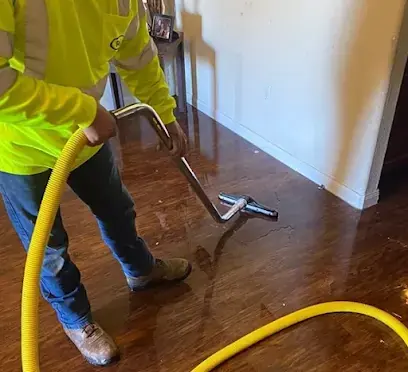
First steps for emergency water extraction in Hightstown
- 1
Find the water
The crew checks each room and the level below for pooled or hidden water.
- 2
Pump it out
Submersible pumps clear deep water and extractors lift it from carpet and pad.
- 3
Check the edges
Baseboards, thresholds and wall bottoms are scanned with a moisture meter.
- 4
Hand off to drying
Wet materials are marked and the drying setup begins.
How emergency water extraction is handled in Hightstown
- L1
Assess
Water depth, source and category are confirmed before pumps start.
- L2
Extract
Pumps and wands remove standing and absorbed water.
- L3
Map
Meters trace moisture past the visible edge of the wet area.
- L4
Dry
Air movers and dehumidifiers take over from there.
What does emergency water extraction cost in Hightstown, NJ?
Hightstown extraction jobs usually run from about $400 to $6,000 or more. Water depth, the number of rooms and whether the water is clean or contaminated move the figure the most.
- Truck-mounted extraction
- Carpet and pad extraction
- Moisture map
- Submersible pump-out
- Weighted carpet extraction
- Baseboard check
- Category 3 water
- Removal of wet pad
- Antimicrobial treatment
Ranges are typical, not a quote: the water category, square footage, material class and how fast drying started move the number most. The water damage cost calculator gives a closer planning range.
The first question the crew asks is where the water came from. Extraction is the first physical job on most water losses, and in Hightstown it can involve very different water. A failed supply hose leaves a clean puddle, while a storm leaves brook water carrying silt and debris.
When the brook is the source
Rocky Brook runs through the borough and is dammed to form Peddie Lake. In August 2011, Hurricane Irene sent the lake out of its banks and put downtown Hightstown under several feet of water. Flood-fed water like that is treated as contaminated, so the crew wears protective gear and bags porous material for disposal instead of trying to save it.
What the crew pulls out and how
Truck-mounted extractors lift water from carpet and pad, while submersible pumps clear deeper pools. A weighted wand presses carpet to release trapped water, and hard floors get a wet vacuum pass along the baseboards. Each room is worked from the lowest point outward, so water is not pushed into dry areas.
- Pump-out of standing water, deepest spots first
- Carpet and pad extraction, with soaked pad removed
- Threshold and baseboard checks where water slips under trim
After the water is gone
Pulling the water is not the end of the job. The team maps moisture in floors and walls, then sets air movers and dehumidifiers, because damp drywall and framing can grow mold within a day or two. That second stage is covered under structural drying in Hightstown, and deeper water is covered under basement flooding cleanup.
Emergency water extraction across Hightstown and nearby communities
Extraction runs across Hightstown, from Downtown Hightstown and the Peddie Lake shoreline to the Stockton Street Historic District and homes along Rogers Avenue.
The same service nearby: emergency water extraction in Monroe Township, Jamesburg, Spotswood.
Emergency Water Extraction questions in Hightstown, NJ
How fast should standing water come out?
Sooner is better, because every extra hour lets water travel into drywall and framing. The crew starts with the deepest water and works outward from there.
Can carpet be saved after extraction?
Often yes when the water was clean and caught early. Pad is usually replaced, and carpet from a contaminated flood is discarded.
Is brook water treated differently?
Yes. Flood-fed water carries silt and bacteria, so porous items are removed and hard surfaces are cleaned with antimicrobial products.
Do I need drying equipment after extraction?
Almost always. Extraction removes bulk water, but the structure still holds moisture that only dehumidifiers and air movers can pull out.
Does extraction work on hard floors?
It does. A wet vacuum clears the surface and the seams, and a meter checks whether water went under the boards or tiles.
What should I photograph first?
Capture the water level on walls and furniture before anything is moved, since the adjuster will want the original conditions.
Standing water needs to come out first.
Describe where the water is and what caused it, and the Hightstown crew will bring the right pumps and extractors.