The Borough of Hightstown runs its own water and sewer utility, so a sewage backup involves both a household problem and a borough system. Reporting the blockage and cleaning the affected rooms are two separate jobs, and both are better started early.
Key takeaways
- Sewer blockages in Hightstown are reported to the borough's Public Works department.
- Sewage backup water is contaminated, so it is cleaned with protective gear, and soaked porous materials are removed rather than dried.
- Children, pets and anyone with a weak immune system should stay out of the affected rooms until cleanup is done.
- Photographs and notes taken before cleanup help with an insurance claim, because policies often treat sewer backup separately from other water loss.
- The cleanup does not depend on who is responsible for the blockage, and it should not wait for that question to be settled.
How sewage reaches a Hightstown home
Hightstown is a doughnut borough, entirely surrounded by East Windsor, and the Borough of Hightstown runs its own sewer system and its own Advanced Wastewater Treatment Plant. The plant is a government owned system serving an estimated 5,669 people across Hightstown and East Windsor Township, and treated wastewater is released to Rocky Brook.
A backup happens when wastewater cannot flow away from a building and returns through the lowest opening, usually a floor drain, a tub, a shower or a toilet. The cause can be a blockage in the home drain, a blockage farther along in the sewer system, or heavy flow that overloads the system during a storm.
FEMA data shows inland flooding is the largest natural hazard in Hightstown, and FEMA records show 11 paid flood insurance claims going back to 1979, so wet weather and drains are a familiar combination.
- Gurgling toilets or drains that bubble after another fixture is used.
- Several fixtures backing up at once, not just one.
- A sewage smell near floor drains or a basement sink.
- Dark, cloudy water rising in a tub or shower.
Who to report a sewer blockage to
In Hightstown, sewer blockages are reported to the borough's Public Works department. That report matters even when the water is only in one house, because a blockage in the shared sewer system can affect neighbors too.
The report and the cleanup run side by side. Public Works handles the system, and the restoration team handles the water and the damage inside the building.
A quick call to the borough also leaves a record of when the problem started, which is useful later if the insurer asks for a timeline.
What to tell Public Works
Give the address, which fixtures are backing up, when it started and whether neighbors have the same trouble.
Mention any recent heavy rain or work on the street, because either can help narrow the cause.
What not to assume
The question of who owns each part of the sewer connection is not settled by the backup itself, and the cleanup should not wait on it.
A plumber or the borough can sort out where the blockage sits while the affected rooms are being made safe.
Safety in the first stretch after a backup
Sewage backup is classed as Category 3 water, the most contaminated category, because it can carry bacteria and viruses. The aim is to limit contact and spread.
Anyone who has to enter the room should wear waterproof boots, gloves and a mask, and wash well afterward.
- Keep children, pets and anyone with a health condition out of the area.
- Do not run water, flush toilets or use washing machines and dishwashers while the drain is blocked.
- Turn off the power to the affected area only if the panel can be reached from a dry spot.
- Do not use a household vacuum on sewage water, because it can spread contamination.
- Open a window for air, but keep the doors to unaffected rooms shut.
What the cleanup team removes and treats
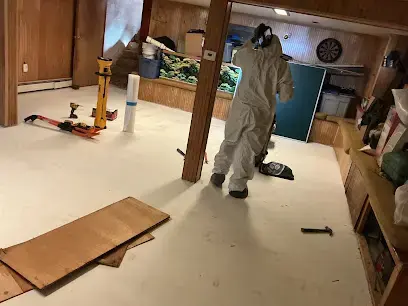
The first step is pump out of the standing water with equipment meant for contaminated liquid. Hard surfaces are then cleaned and treated with antimicrobial products, and porous materials that soaked up sewage water are removed.
That removal list is longer than most owners expect, because contaminated water does not wash out of porous materials. Sewage backup cleanup in Hightstown follows that approach from the first pump out to the final readings.
Materials that usually go
Carpet, pad and soaked insulation do not dry clean, so they are bagged and removed.
Drywall that wicked sewage water is cut out above the waterline.
- Carpet and pad
- Wet insulation
- Drywall and baseboards touched by sewage
- Cardboard boxes and paper stored on the floor
Materials that are often cleaned
Sealed tile, concrete and finished wood surfaces can often be cleaned and treated, depending on how long they were wet.
Drying the room after cleaning
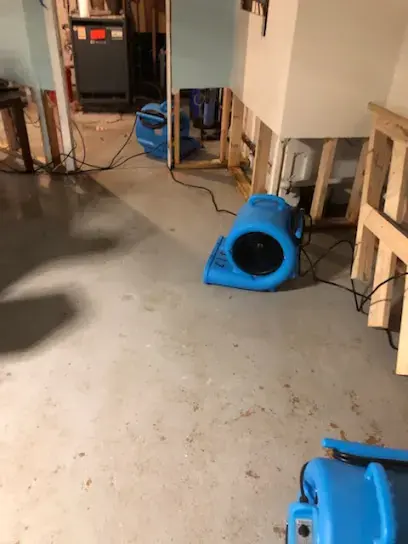
Once contaminated materials are out, the room is dried. Air movers and dehumidifiers run while moisture meters track the walls and subfloor, and drying continues until readings reach normal levels.
Prompt drying also limits mold growth, which can begin on wet materials within 24 to 48 hours. Water extraction in Hightstown and drying are often needed together after a backup, especially when the water was deep.
- Readings are repeated daily and logged.
- Equipment is placed to pull moisture from wall cavities as well as surfaces.
- Odor control follows removal, because odors point to leftover material.
- A final check confirms the room is ready for rebuilding.
- Drying equipment is removed only after the readings are steady, not at an arbitrary date.
Wet weather and backups in Hightstown
Hightstown has a humid continental climate that is wet all year, with July the wettest month. Hurricane Irene in August 2011 sent Peddie Lake out of its banks and put downtown Hightstown under several feet of water, and Rocky Brook, which feeds the lake, carries rain runoff through the borough.
Heavy rain does not prove that a backup came from the storm, but wet weather is a common time for drains and sewer systems to be stressed. A backup that appears during or after a downpour should be reported with that detail.
When floodwater and sewage mix
If floodwater from Rocky Brook or Peddie Lake enters a building and a drain backs up at the same time, the whole loss is treated as contaminated.
The cleanup then follows the sewage rules for every wet surface, not just the area near the drain.
Downtown businesses
Downtown Hightstown has restaurants, boutiques and galleries around Route 33 and County Route 571, and a backup in a kitchen or restroom can close a business for a stretch.
Owners should document the loss, tell Public Works about the blockage and ask the restoration team for a written scope of the cleanup.
Insurance, paperwork and the rebuild
Many homeowner policies treat sewer backup differently from other water loss, so it helps to read the policy early and ask the insurer about backup coverage. Photographs of the water, the affected rooms and the damaged items support the claim.
Owners can learn more about the Hightstown water damage team and compare notes with the broader sewage backup service in Monroe Township for the full scope of work.
- Take photos before anything is moved or thrown out.
- Keep receipts for emergency work and temporary lodging.
- Save notes on who was contacted and when, including Public Works.
- Separate the cleanup invoice from the rebuild estimate.
Questions
Who should be told first about a sewage backup in Hightstown?
Sewer blockages in Hightstown are reported to the borough's Public Works department, and the restoration team can begin protecting and cleaning the house at the same time.
Is sewage backup water safe to clean up myself?
Sewage backup is contaminated water that can carry bacteria and viruses, so protective gear and proper disposal matter, and larger backups are better handled by trained responders.
Can carpet and drywall be saved after a sewage backup?
Usually not. Porous materials that soaked up sewage water are removed, while sealed hard surfaces can often be cleaned and treated.
Does the cleanup wait until the cause of the blockage is found?
No. The cleanup can begin right away, because standing contaminated water keeps spreading while the cause is traced.
How long does drying take after the cleanup?
It depends on how much water spread and which materials were wet. Moisture readings decide when drying is done, not a fixed schedule.