Sump Pump Failure Cleanup in Freehold, NJ
When a sump pump stops during heavy rain, the pit overflows onto the floor. The Freehold crew removes the water, cleans the affected area and dries the slab, walls and boxed belongings.
(888) 471-9821Clear my flooded pit area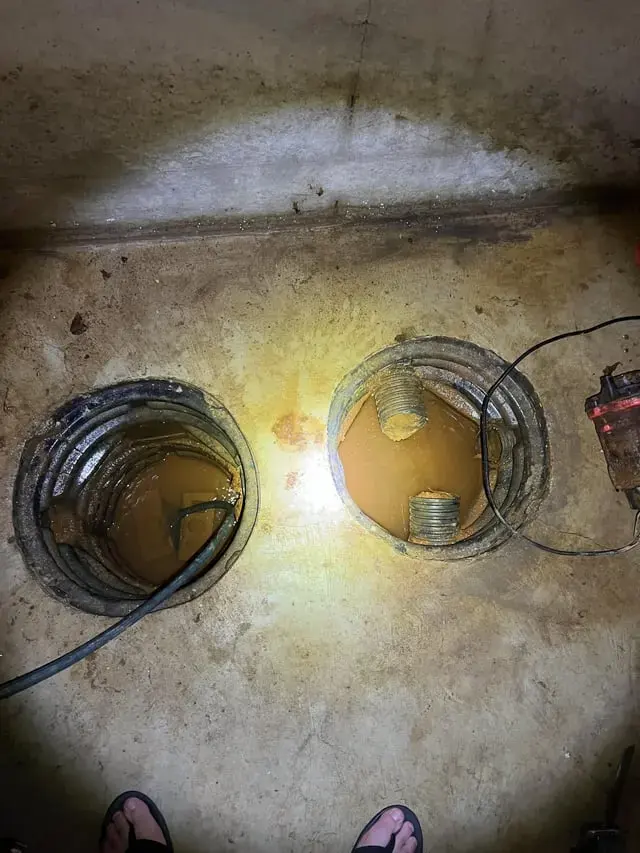
First steps for sump pump failure cleanup in Freehold
- 1
Cut the power
Switch off lower-level circuits before stepping in any water.
- 2
Lift belongings
Raise boxes and furniture onto blocks, and photograph the damage.
- 3
Pump out the overflow
Pumps clear the water, and the pit area is checked.
- 4
Clean, then dry
Surfaces are treated, then dehumidifiers run on the slab.
How sump pump failure cleanup is handled in Freehold
- L1
Remove
Overflow water and silt are pumped and shoveled out.
- L2
Clean
Floors and walls are washed and treated.
- L3
Dry
Dehumidifiers run on the slab and block walls.
- L4
Check
Readings on slab and walls confirm dry.
What does sump pump failure cleanup cost in Freehold, NJ?
Sump pump failure cleanup in Freehold runs from about $1,500 when the overflow is caught early to $15,000 or more for a deep, long-standing flood. Finished space and stored contents push the number up.
- Pump-out and extraction
- Antimicrobial cleaning
- Slab drying
- Carpet and pad out
- Drywall flood cuts
- LGR dehumidifiers
- Contents removal
- Containment
- Extended drying
Ranges are typical, not a quote: the water category, square footage, material class and how fast drying started move the number most. The water damage cost calculator gives a closer planning range.
A sump pump is a one-job machine, and when it fails during a storm the water has nowhere to go but the floor. The loss grows by the hour, so the first moves are to stop it spreading, pull the water out and protect whatever is still dry.
Why failures happen in a wet year
Annual precipitation in the Freehold area averages 48.57 inches, so a pump may run for long stretches. Power cuts, stuck floats and worn motors tend to show up when a storm is already overhead. No local pump rule is involved; this is simply how pumps fail.
- Overflow water is pumped out and the pit area is cleared
- Floors, baseboards and block walls are washed and treated
- Stored boxes and furniture are lifted and sorted for drying or disposal
Drying the slab and walls
Dehumidifiers and air movers go in once the water is gone. Concrete and block take longer than drywall, so readings are taken on the slab itself, not just the wall paint. The logs go into the claim file.
What comes next
A pump that failed once needs replacing or repair by a plumber before the next storm. The drying team can document the loss for the adjuster, and basement flooding cleanup covers larger spreads.
Sump pump failure cleanup across Freehold and nearby communities
Pump failure cleanup serves homes across Freehold Borough, from the older streets around Brinckerhoff Avenue and Throckmorton Street to the residential blocks off Park Avenue and Route 79 on South Street.
The same service nearby: sump pump failure cleanup in Monroe Township, Jamesburg, Spotswood.
Sump Pump Failure Cleanup questions in Freehold, NJ
Why does a sump pump fail in a storm?
A float can stick, a motor can wear out, or power can drop when demand is highest. The pump then stops while water is still rising.
Is the water in the pit clean?
Usually not. Groundwater picks up silt and bacteria, so floors and walls are cleaned and treated before drying starts. Larger floods follow storm and flood cleanup.
Will the floor need to come out?
Finished flooring and carpet often do, while sealed concrete is cleaned and kept. Readings decide which.
Can stored boxes be saved?
Dry cardboard and clothing are often saved if lifted quickly. Items that sat in water are sorted and photographed before disposal.
Does the pump itself need work?
Yes. A plumber repairs or replaces the pump, while the drying team handles the water damage and records the whole loss for the adjuster.
Should stored items be moved first?
Yes, if it is safe. Lifting boxes and furniture onto blocks keeps them out of the water and speeds up the cleanup.
Clean and dry after the pump quit
The crew removes the overflow, treats the floor and dries the slab to a reading, and the records go to the adjuster.