Structural Drying and Dehumidification in Freehold, NJ
Once the water is out, the building still holds moisture in framing, subfloor and walls. The Freehold crew sets air movers and dehumidifiers and returns to read the numbers until every material tests dry.
(888) 471-9821Start drying my home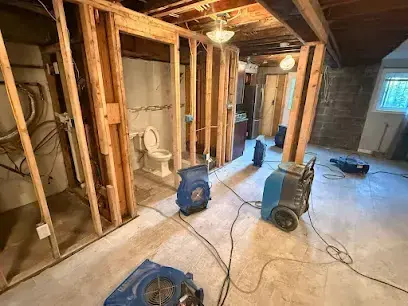
First steps for structural drying and dehumidification in Freehold
- 1
Map the wet zones
Meters and imaging find every wet material.
- 2
Place the equipment
Air movers and dehumidifiers go where the map points.
- 3
Read each visit
Daily readings steer changes to the setup.
- 4
Release the house
Equipment leaves when readings match dry.
How structural drying and dehumidification is handled in Freehold
- L1
Map
Wet zones are identified with meters.
- L2
Equip
Dehumidifiers and air movers go in.
- L3
Monitor
Readings are logged daily.
- L4
Finish
Equipment is removed at the dry goal.
What does structural drying and dehumidification cost in Freehold, NJ?
Structural drying in Freehold runs from about $1,000 for one room to $15,000 or more for a large loss with Class 4 materials. Rooms involved, material type and equipment days set the figure.
- Air movers
- LGR dehumidifier
- Daily logs
- Multiple dehumidifiers
- Cavity drying
- Containment
- Desiccant units
- Hardwood or slab
- Extended drying
Ranges are typical, not a quote: the water category, square footage, material class and how fast drying started move the number most. The water damage cost calculator gives a closer planning range.
Structural drying begins after extraction and removal. Its job is to take moisture out of the materials that remain, so the house returns to a dry baseline and rebuilding can begin without hidden dampness behind it.
Many kinds of buildings
Freehold Borough has 4,379 housing units, many in older or multifamily buildings. A rowhouse, a two-unit house and a larger apartment building each hold moisture differently, so equipment placement follows the building as well as the water.
- Air movers push dry air across floors and into open cavities
- LGR dehumidifiers pull moisture from the air and the materials
- Containment keeps drying focused on the wet zone
Why drying takes days
Water sinks into wood, plaster and masonry, and it comes back out slowly. Pushing equipment harder rarely shortens that, so steady airflow and low humidity do the work while the readings track progress.
The equipment also protects the rest of the house, because humid air from one wet room can settle into dry ones. Closed doors and plastic sheeting keep the moisture in one place until it is removed.
Readings decide
The team measures wet materials and compares them with dry reference points in the same building. Equipment moves or is added based on those numbers, and it is removed only when they match.
Related
For the first step, see water extraction. For woods, see hardwood floor water damage.
Structural drying and dehumidification across Freehold and nearby communities
Structural drying runs in houses, apartments and shops across Freehold Borough, from Downtown Freehold along East Main Street and West Main Street to the residential blocks around Court Street and Park Avenue.
The same service nearby: structural drying and dehumidification in Monroe Township, Jamesburg, Spotswood.
Structural Drying and Dehumidification questions in Freehold, NJ
How long does structural drying take?
Often several days, and longer for slab, hardwood and thick framing. The daily readings set the finish date, not the calendar.
Why do dehumidifiers matter?
They pull moisture from the air so the wet materials keep releasing it. Fans alone only move damp air around.
Why does equipment return each day?
The team measures moisture and adjusts placement, which speeds the job and avoids over-drying.
Is the equipment loud?
It hums steadily, and it is a normal part of drying a home.
Does drying change the electric bill?
Equipment does draw power. The team keeps the setup as small as the readings allow.
Can drying start before repairs?
Yes. Drying usually begins right after extraction and removal, and repairs wait until the readings pass.
Dry the structure, not just the surface
Air movers and dehumidifiers run on the moisture map, and readings show when every layer of the house is dry.