Hardwood Floor Water Damage in Jamesburg, NJ
Wood takes on water quickly and gives it back slowly. The drying team uses panel mats, dehumidifiers and daily wood readings to save the boards when they can be saved and to plan removal when they cannot.
(888) 471-9821Report a wet floor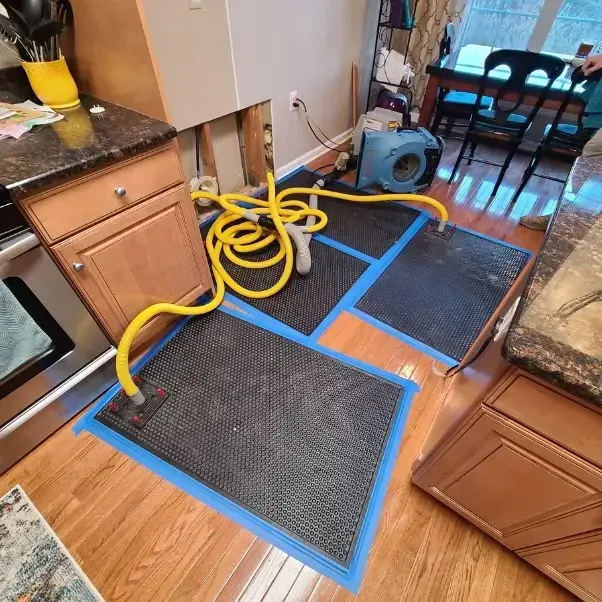
First steps for hardwood floor water damage in Jamesburg
- 1
Stop the water
Shut the source and soak up standing water.
- 2
Clear the floor
Lift rugs and furniture that trap moisture on the wood.
- 3
Photograph the boards
Shoot cupping, gaps and stains before drying begins.
- 4
Call the drying team
Describe the finish and how long the boards stayed wet.
How hardwood floor water damage is handled in Jamesburg
- L1
Assess
Readings show how deep the water went.
- L2
Mat
Panel mats go down and dehumidifiers start.
- L3
Monitor
Wood readings repeat each visit until they level.
- L4
Decide
Boards stay if they flatten, or come out.
What does hardwood floor water damage cost in Jamesburg, NJ?
Hardwood cost depends on how much floor got wet and whether the boards can stay. A small area caught early is the lowest card, while several rooms or full removal reach the top range.
- Panel mats
- Daily wood readings
- Dehumidifier
- Mat system
- Subfloor drying
- Desiccant unit
- Boards removed
- Subfloor drying
- Extended equipment
Ranges are typical, not a quote: the water category, square footage, material class and how fast drying started move the number most. The water damage cost calculator gives a closer planning range.
Jamesburg saw water enter residences in July 2005 and again in August 2021, and wet floors followed. Hardwood is the finish that reacts first, so what happens in the opening days decides whether the boards can stay.
How wood shows damage
Cupping lifts the board edges, crowning raises the center and buckling pushes whole sections off the subfloor. Gaps between boards and a darkened finish also point to moisture that has been there a while. Sealed boards can trap moisture beneath them, and mold can begin in 24 to 48 hours.
- Panel mats pull moisture up and out through the board surface
- Dehumidifiers or a desiccant unit hold the room air dry
- Readings on boards and subfloor track progress each day
Saving boards or removing them
Boards that cupped but never separated from the subfloor often flatten as they dry. Sections that buckled, stained black or lifted away usually have to be removed so the subfloor beneath can dry too. Refinishing and replacement belong to a flooring contractor, once the readings say the wood is dry.
Related floor work
Floors wet by a spill from above or below follow water extraction first, then structural drying for the subfloor and wall bottoms.
Hardwood floor water damage across Jamesburg and nearby communities
Hardwood floor work serves Jamesburg living rooms, kitchens and hallways around Gatzmer Avenue, East Church Street, the Thompson Park side of Perrineville Road and the Forsgate Drive area.
The same service nearby: hardwood floor water damage in Monroe Township, Spotswood, Hightstown.
Hardwood Floor Water Damage questions in Jamesburg, NJ
Will cupped hardwood go flat again?
Often, if the wet period was short and the boards stay attached. Slow drying lets the wood release moisture evenly.
Should boards be sanded right after a leak?
No. Sanding wet wood seals moisture in and can leave it permanently marked. Refinishing waits until readings show the floor is dry.
Why does the subfloor matter?
Water under the boards soaks the subfloor, which holds moisture longer than the wood above. If it stays wet, the finish can fail again.
Is fast heat the best way to dry a wood floor?
No. Heat applied too quickly can split boards and open gaps. Controlled airflow with dehumidification is gentler.
Does insurance cover water damaged hardwood?
Sudden leaks and storm water are often covered, subject to the policy. Daily readings and dated photos document the floor.
Save the boards while there is still time
Panel mats, dehumidifiers and daily wood readings decide whether the floor stays, with every reading kept for the claim.