Hardwood Floor Water Damage in Freehold, NJ
Wet hardwood cups, crowns and buckles if it is left alone. The Freehold crew uses mat systems and dehumidifiers with daily wood readings to dry boards in place whenever that is possible.
(888) 471-9821Save my wood floors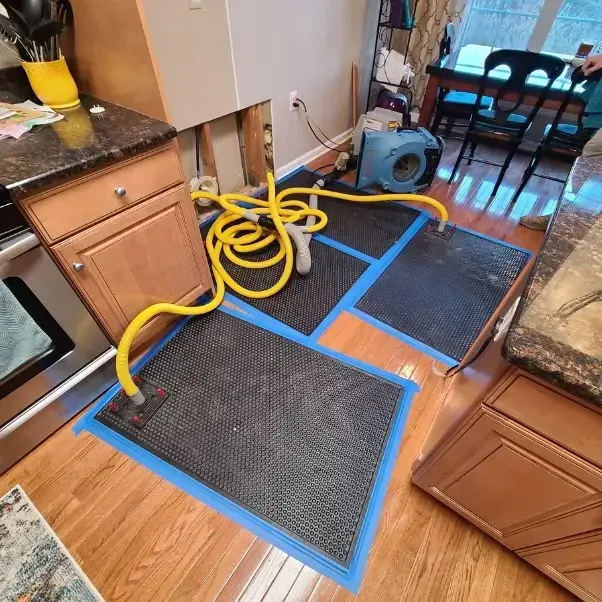
First steps for hardwood floor water damage in Freehold
- 1
Extract first
All standing water comes off the floor surface.
- 2
Set the mats
Panels and hoses pull moisture from the boards.
- 3
Read every day
Wood readings steer changes to the setup.
- 4
Decide on removal
Boards come up only if drying cannot save them.
How hardwood floor water damage is handled in Freehold
- L1
Extract
Surface water is removed first.
- L2
Mat dry
Panels and hoses pull moisture out.
- L3
Monitor
Wood readings are logged every day.
- L4
Decide
Boards stay or come up based on the numbers.
What does hardwood floor water damage cost in Freehold, NJ?
Hardwood floor water damage in Freehold typically runs from about $1,500 for a small area caught early to $14,000 or more when several rooms need board removal. Area, species and speed set the price.
- Panel mats
- Daily wood readings
- Dehumidifier
- Mat system
- Subfloor drying
- Desiccant unit
- Boards removed
- Subfloor drying
- Extended equipment
Ranges are typical, not a quote: the water category, square footage, material class and how fast drying started move the number most. The water damage cost calculator gives a closer planning range.
Hardwood floors reward patience and punish delay. The sooner water is out and drying begins, the better the chance the original boards stay in place and the finish is saved. A coat of finish can also trap moisture, so sanding and refinishing wait.
Older homes, older floors
Freehold Borough is known for Victorian era homes, such as those on Brinckerhoff Avenue, and the median home was built in 1960. Floors in houses like that are often wood, sometimes laid over old subfloors that trap water. This is general trade knowledge and not a local flooring survey.
- Standing water is extracted before any drying equipment is set
- Panel mats pull moisture through the boards and the subfloor
- A desiccant or LGR dehumidifier keeps the room air dry
Why wood needs patience
Hardwood dries slowly on purpose. Pulling moisture out too fast can crack boards, so the crew adjusts airflow and heat day by day and watches the readings, not the clock.
When boards have to come up
If boards keep cupping or the subfloor stays wet, a row is removed to open the cavity to air. Removal is a last step, taken only after readings stop improving.
Related
Floods that reach wood follow water extraction, and whole-room drying plans follow structural drying.
Hardwood floor water damage across Freehold and nearby communities
Wood floor drying runs in houses, apartments and shops across Freehold Borough, from Victorian homes near Brinckerhoff Avenue to the blocks around Court Street, Park Avenue and East Main Street.
The same service nearby: hardwood floor water damage in Monroe Township, Jamesburg, Spotswood.
Hardwood Floor Water Damage questions in Freehold, NJ
Can wet hardwood be saved?
Often, if drying starts early. Mats and dehumidifiers pull moisture out of the boards before cupping becomes permanent.
Why does the floor cup a few days later?
Boards release water unevenly, so the face dries faster than the underside and the edges curl.
Should the floor be sanded right away?
No. The wood must reach normal moisture first, or sanding will lock in the shape.
When do boards have to be removed?
When cupping continues or the subfloor will not dry. Readings show when drying in place has stopped working.
Is the damage covered?
A sudden leak is commonly covered. Photos and readings document the floor for the adjuster.
Dry the wood before it buckles
The drying team sets mats, reads the wood daily and removes boards only as a last step, with every reading logged for the claim.